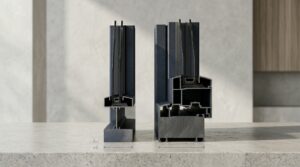
Steel Window Frames: The Complete Australian Guide
Steel Window Frames keep appearing in the most architecturally considered homes being built and renovated across Australia, and for good reason. They are not a passing trend. They are a structural material with a specific set of advantages: dramatically thinner sightlines than aluminium, genuine longevity, and a visual quality that suits everything from heritage restorations to contemporary new builds.
They also come with real trade-offs. Steel conducts heat, costs more than aluminium, and requires a proper finish specification to perform over the long term. This guide covers all of it: how Steel Frames are built, how they compare to aluminium, what thermal performance actually looks like in practice, and what to check before you buy.
What Are Steel Window Frames?
Steel Window Frames are structural window frames fabricated from mild steel or thermally broken steel profiles. Unlike aluminium or uPVC frames, which rely on bulk to achieve rigidity, steel achieves it through material strength. That structural efficiency is what makes Steel Frames distinctive: the sightlines (the visible width of the frame when looking at a window) are dramatically thinner than what aluminium can achieve at equivalent strength.
A standard Steel Window Frame can achieve a face width of 20mm to 40mm. Many standard aluminium frames start considerably wider, though architectural aluminium series have narrowed the gap in recent years. For architects designing with large glazed panels, corner glazing, or multi-panel configurations, the sightline advantage of steel remains meaningful.
Beyond proportion, Steel Frames carry a visual weight and solidity that suits a wide range of project types. Metro Steel Windows supplies Steel Windows for new residential builds, heritage restorations, hospitality fitouts and commercial projects, contexts where the frame itself is part of the architectural language.
Understanding Steel Window Frame Profiles
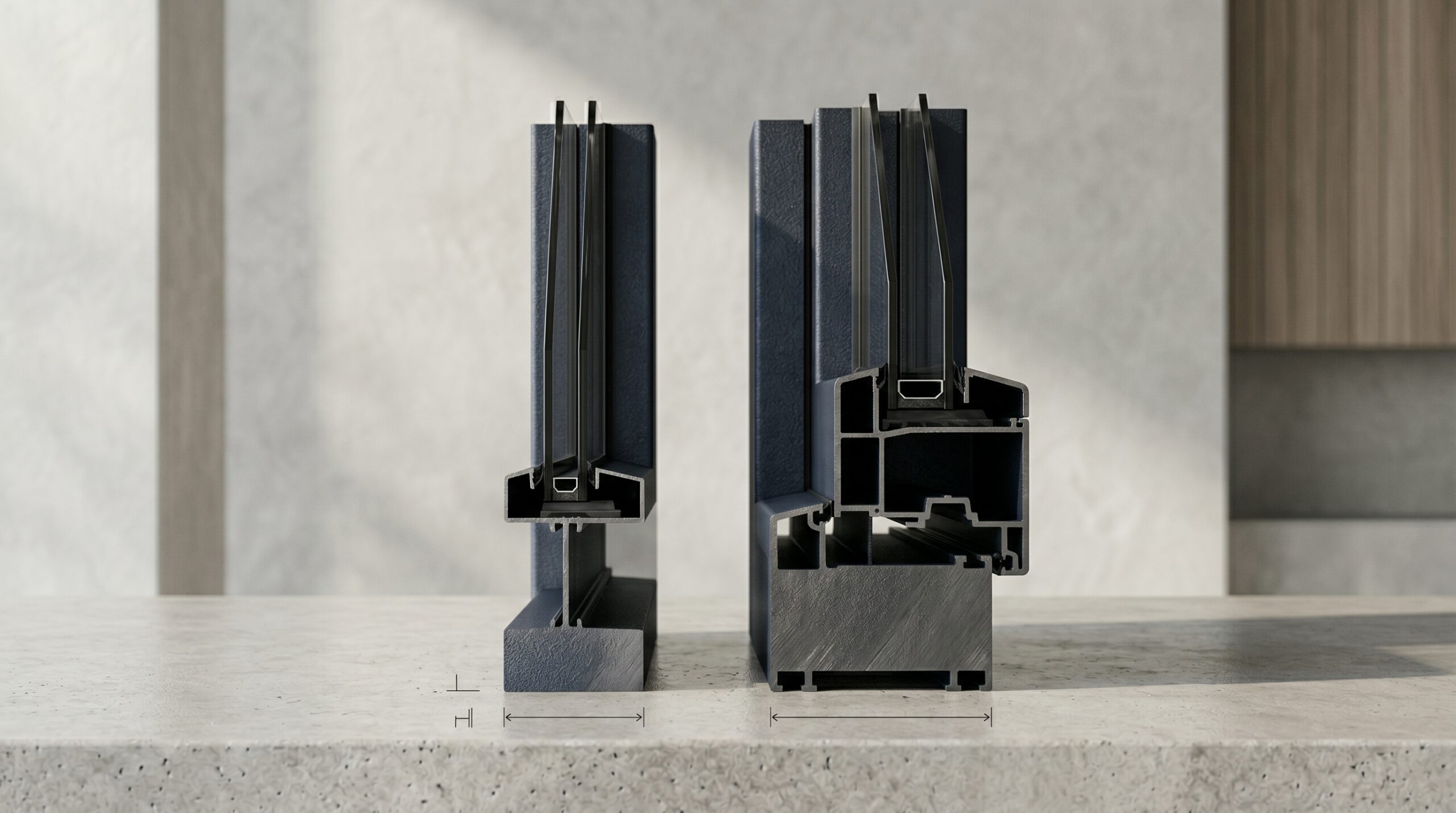
Steel Window Frames are built around standardised rolled steel profiles. The two most common in Australian residential and commercial projects are the W20 and W40.
W20 Profile
The W20 profile has a face width of 20mm. It is the slimmest standard option and is specified where maximum glass area and minimal frame visibility are the priority. It suits contemporary residential builds, large pivot doors and frameless-style glazed facades. Because the profile is narrow, it requires precise installation tolerances, typically within 3mm, so the surrounding structure needs to be accurate before the frame goes in.
W40 Profile
The W40 profile has a face width of 40mm. It provides a more substantial sightline that suits heritage buildings, warehouse conversions and projects where a stronger visual frame is appropriate or required by heritage guidelines. The W40 also accommodates thicker insulated glazing units (IGUs), which matters when thermal performance is a priority.
On architectural drawings, profiles are typically called up by designation, W20 or W40, alongside the glazing specification, for example: “W40 frame, 6/12/6 IGU.” If you are working with an architect, this is the notation to look for in the window schedule.
Thermal Performance: Do Steel Frames Get Cold?
This is one of the most important questions to answer honestly. Steel is a conductor of heat. Without any intervention, a Steel Window Frame will transfer heat and cold through the frame, which means condensation on the interior face in cooler climates, heat loss in winter, and an impact on your NatHERS energy rating.
The fix is a thermal break.
What Is a Thermal Break?
A thermal break is a continuous strip of low-conductivity material, typically a structural polyamide, inserted between the interior and exterior faces of the steel profile. It physically interrupts the path that heat travels through the frame, substantially reducing thermal conductivity and the risk of condensation.
Metro Steel Windows manufactures a Thermally Broken Steel Window range designed for the Australian climate. Thermally Broken Steel Frames can achieve U-values that support NatHERS compliance when paired with appropriate glazing, typically a double-glazed IGU of 24mm or greater. Your energy assessor will confirm the specific U-value required for your climate zone and building design.
If you are building in Melbourne, Canberra, the Southern Highlands, Tasmania or any alpine area, a thermal break is not optional. It is the specification you should be requesting. In warmer climates like Queensland or northern Western Australia, non-thermally broken frames are often acceptable, but it is worth confirming with your energy assessor before specifying.
One honest acknowledgement: even with a thermal break, Steel Frames will not match the thermal performance of a premium uPVC system. If thermal performance is the single deciding factor and aesthetics are secondary, uPVC performs better on that metric. Most clients choosing steel are making a considered trade-off. They accept a slightly higher thermal conductivity in exchange for the structural and aesthetic properties that steel uniquely provides.
Steel vs Aluminium Window Frames: An Honest Comparison
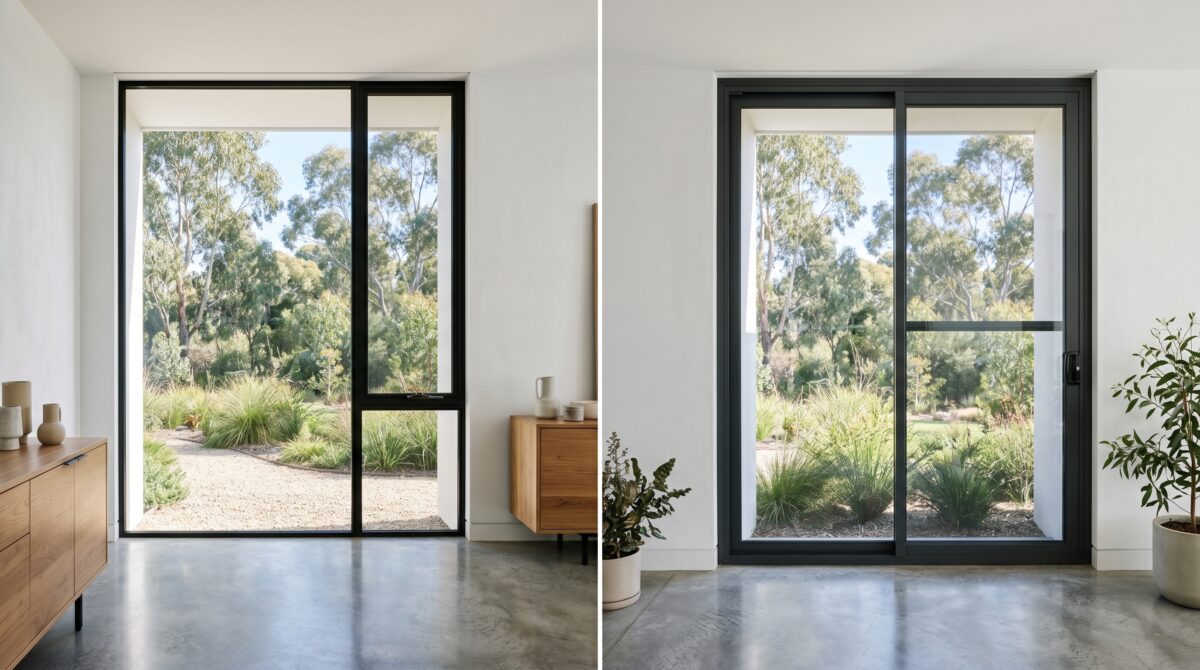
This is the comparison most buyers are working through. Here is a straightforward breakdown:
| Feature | Steel Window Frames | Aluminium Window Frames |
| Minimum sightline | ~20mm (W20 profile) | Varies, architectural series can approach 35–45mm |
| Structural strength | Very high | Moderate |
| Thermal performance | Good with thermal break | Good with thermal break |
| Corrosion resistance | Requires protective coating | Naturally resistant |
| Coastal suitability | Yes, with correct coating | Yes |
| Lifespan | 50+ years with maintenance | 30–50 years |
| Cost | Higher | Lower |
| Aesthetic | Slim, architectural, industrial | Broader range of styles |
| Availability | Custom fabricated | Widely available off the shelf |
The cost difference is real and worth acknowledging. Steel Window Frames are a premium product. In our experience, a Steel Window package for a residential project can cost roughly two to three times an equivalent aluminium specification, depending on the profile, glazing and finish. That premium buys you structural performance, thinner sightlines, and a material that, properly maintained, will outlast most other window systems used in Australian construction.
Aluminium is not an inferior product. It is a different product. The choice between them depends on what your project requires architecturally and what your budget allows.
Not sure which is right for your project? Metro Steel Windows can advise on profile selection, glazing specs and relative cost for your specific brief. Contact the team here.
Finish and Colour Options for Steel Window Frames in Australia
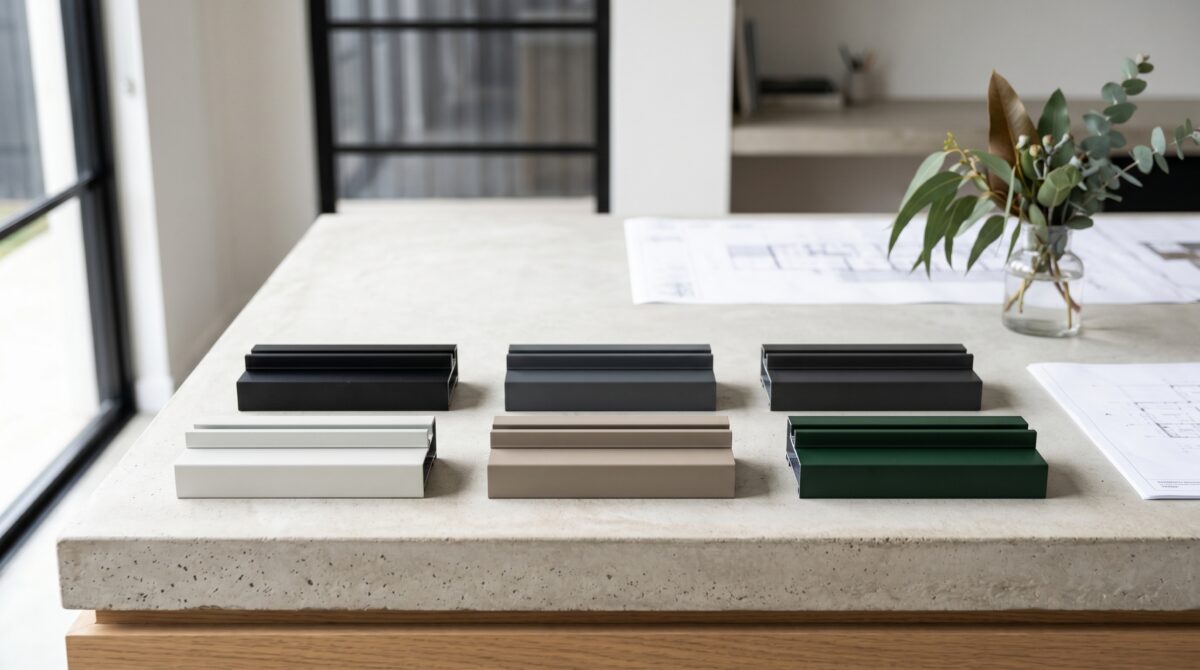
Steel Window Frames require a protective coating to prevent corrosion. The standard finish process for a quality Steel Frame involves hot-dip galvanising followed by powder coating. Hot-dip galvanising provides a zinc barrier that protects the steel substrate. Powder coating is then applied over the galvanised surface in the specified colour. This sequence matters, because powder coat applied directly to bare steel without galvanising is a long-term maintenance problem.
Colour options are broad. Standard RAL and AS/NZS colours are available, and custom colour matching is possible on request. The most commonly specified finishes in current Australian residential projects include:
- Satin black, the most popular choice for contemporary and heritage projects
- Monument and Basalt, for a softer dark tone
- Surfmist and Paperbark, for lighter coastal or Hamptons-style homes
- Custom heritage colours for restoration work requiring period-accurate finishes
For coastal installations within 1–2km of the ocean, the coating specification matters more than it does inland. In those environments, additional surface protection and a regular inspection programme are worth factoring into your plans from the start.
How to Maintain Steel Window Frames
Steel Window Frames are low maintenance, but they are not zero maintenance. The finish is what needs attention, not the steel itself.
For inland installations, an annual inspection of the powder coat surface is sufficient. Look for chips, scratches or areas where the coating has been mechanically damaged. Small chips should be touched up promptly with a compatible touch-up paint to prevent moisture reaching the substrate.
For coastal installations within 1–2km of the ocean, inspect twice yearly. Salt-laden air is more aggressive, and any coating damage should be addressed quickly. A full recoat, typically every 10 to 15 years depending on exposure, will reset the protection and extend the frame’s life significantly.
The hardware (hinges, stays, locking mechanisms) should be lubricated annually with a silicone-based lubricant. Avoid petroleum-based products on powder-coated surfaces.
What to Look For When Buying Steel Window Frames in Australia
Not all Steel Window systems are equivalent. Here is what is worth checking before you commit to a supplier.
Profile specification. Ask whether the frames are fabricated from genuine rolled Steel Profiles (W20, W40) or from hollow rectangular sections (RHS). RHS-based frames are simpler to fabricate but produce heavier, less refined sightlines. If sightline width matters to your project, confirm the profile type in writing.
Glazing capacity. Check what thickness of IGU the frame can accommodate. A W40 frame can typically take a 28mm IGU, for example a 6/12/6 configuration. If your energy assessor requires a thicker unit for NatHERS compliance, confirm the frame can accept it before the order is placed.
Thermal break option. If you are building in a cool climate zone, confirm whether a thermally broken version is available in the profile you are specifying.
Finish process. Ask whether frames are hot-dip galvanised before powder coating, or primed and powder coated only. For any installation in a moderate or high-corrosion environment, hot-dip galvanising before powder coat is the correct specification.
Installation. Steel Windows are not standard glazier work. Ask whether your supplier installs their own frames or supplies only, and whether they can recommend an experienced installer in your area if required. Getting this wrong at installation undoes everything that was right in fabrication.
Fabrication lead times. Steel Windows are custom fabricated to order. Lead times of 8 to 14 weeks from order to delivery are typical. Confirm the current lead time with your supplier and factor it into your programme early.
Steel Window Frames for Different Project Types
New Residential Builds
In new builds, Steel Window Frames are most often specified where the architectural brief calls for large glazed openings, slim framing, or a strong contemporary aesthetic. The structural capacity of steel allows for spans that aluminium cannot achieve at the same sightline width.
The Strath Creek Farm House in Victoria’s High Country is a good example. Designed by Tandem Design Studio as an off-grid family retreat, the project used Metro’s M40 profile, finished in cement grey, for floor-to-ceiling awning windows and French doors throughout. In an alpine setting where the frame had to perform visually and structurally across large openings, steel was the only material that delivered the sightline the design required.
Renovations
In renovations, the most common application is replacing existing timber or aluminium frames to update the look of the building or to open up walls with larger glazed openings. Steel Frames can often be fitted into existing openings with the addition of a structural sub-frame, but each situation requires assessment. The surrounding structure needs to be capable of taking the load and meeting the installation tolerances the profile requires.
Heritage Restorations
Steel Window Frames have been used in Australian buildings since the early twentieth century, particularly in Art Deco and Inter-War construction from the 1920s onward. For heritage-listed properties or buildings in heritage conservation areas, Steel Frames are often the only material that will satisfy heritage authority requirements, both because they are the historically accurate material and because W40 profiles can replicate original sightline dimensions precisely.
The Balmain Residence in Sydney is a representative example. This heritage-listed double-storey sandstone home, designed by Mitchell Architects and built by Jackal Constructions, required M40 profile Steel Frames to bridge the original structure and a contemporary concrete extension. The profile geometry respected the building’s heritage scale while the glazed walkway and courtyard connection created an entirely contemporary living sequence inside it.
Hospitality and Commercial Projects
In hospitality and commercial fitouts, Steel Frames are specified for their durability and the visual weight they bring to a space. A Steel Framed glazed partition or facade has a presence that aluminium, regardless of finish, does not replicate.
The Continental Hotel in Sorrento, a heritage-listed venue on Victoria’s Mornington Peninsula operating since 1875, is a useful reference. The multi-million-dollar restoration, designed by Woods Bagot, required replacement of existing heritage windows and new internal Steel Framed doors and entryways across five buildings. W40 profile frames in black were used throughout, for the dining spaces overlooking the ocean and for the internal bar entries, because the profile matched the scale of the original architecture in a way no aluminium alternative could. In a project of that heritage sensitivity, getting the frame geometry right was not a design preference, it was a compliance requirement.
Bushfire-Prone Areas
Steel performs well in bushfire-prone areas and can be specified to meet BAL (Bushfire Attack Level) requirements when combined with appropriate glazing and sealing. If your site carries a BAL rating, confirm the specific requirements with your certifier and raise the BAL specification with your window supplier before ordering.
Ready to Specify Steel Windows for Your Project?
The right frame specification depends on your climate zone, glazing requirements, structural openings and programme. If you are at the research stage, a conversation with the Metro Steel Windows team is the most efficient next step. We can advise on profile selection, thermal performance requirements and lead times based on your brief.
To see how Steel Window and door systems perform across completed residential, heritage and commercial projects, visit our project gallery.
Request a project consultation →
Frequently Asked Questions
Are Steel Window Frames suitable for the Australian climate?
Yes, across most of Australia. In warm and temperate climates, standard Steel Frames perform well with correct coating and maintenance. In cooler climates including Melbourne, Canberra, Tasmania and alpine regions, Thermally Broken Steel Frames are recommended to manage condensation and meet energy performance requirements. Coastal environments require a robust finish specification, typically hot-dip galvanising followed by powder coating, along with periodic inspection.
How long do Steel Window Frames last?
In our experience, a correctly fabricated and finished Steel Window Frame, properly maintained, will last in excess of 50 years. The limiting factor is almost always the finish, not the steel itself. Frames that are recoated when the finish begins to deteriorate will outlast most other window materials used in Australian construction.
Do Steel Window Frames rust?
Bare steel will corrode when exposed to moisture, which is why the finish process matters. Frames that are hot-dip galvanised and then powder coated carry two layers of protection. In a standard inland environment with no mechanical damage to the coating, corrosion is not a practical concern. In coastal environments the risk is higher, and more frequent inspection is warranted.
What is the difference between a W20 and W40 Steel Window profile?
W20 and W40 refer to the face width of the rolled Steel Profile, 20mm and 40mm respectively. The W20 produces an extremely slim sightline suited to contemporary residential projects. The W40 has a more substantial frame that suits heritage buildings, warehouse conversions and projects where heritage guidelines require a specific sightline width. The W40 also accommodates thicker glazing units, which is relevant when thermal performance is a priority.
Can Steel Window Frames be retrofitted into an existing timber opening?
In most cases, yes. Steel Frames can be installed into existing timber openings using a structural sub-frame, which allows the new frame to be set correctly within the existing reveal. The key requirement is that the surrounding structure is sound and that the opening dimensions meet the installation tolerances for the profile being used. Each retrofit situation is different, and it is worth having your supplier or installer assess the opening before ordering.
Read more news.
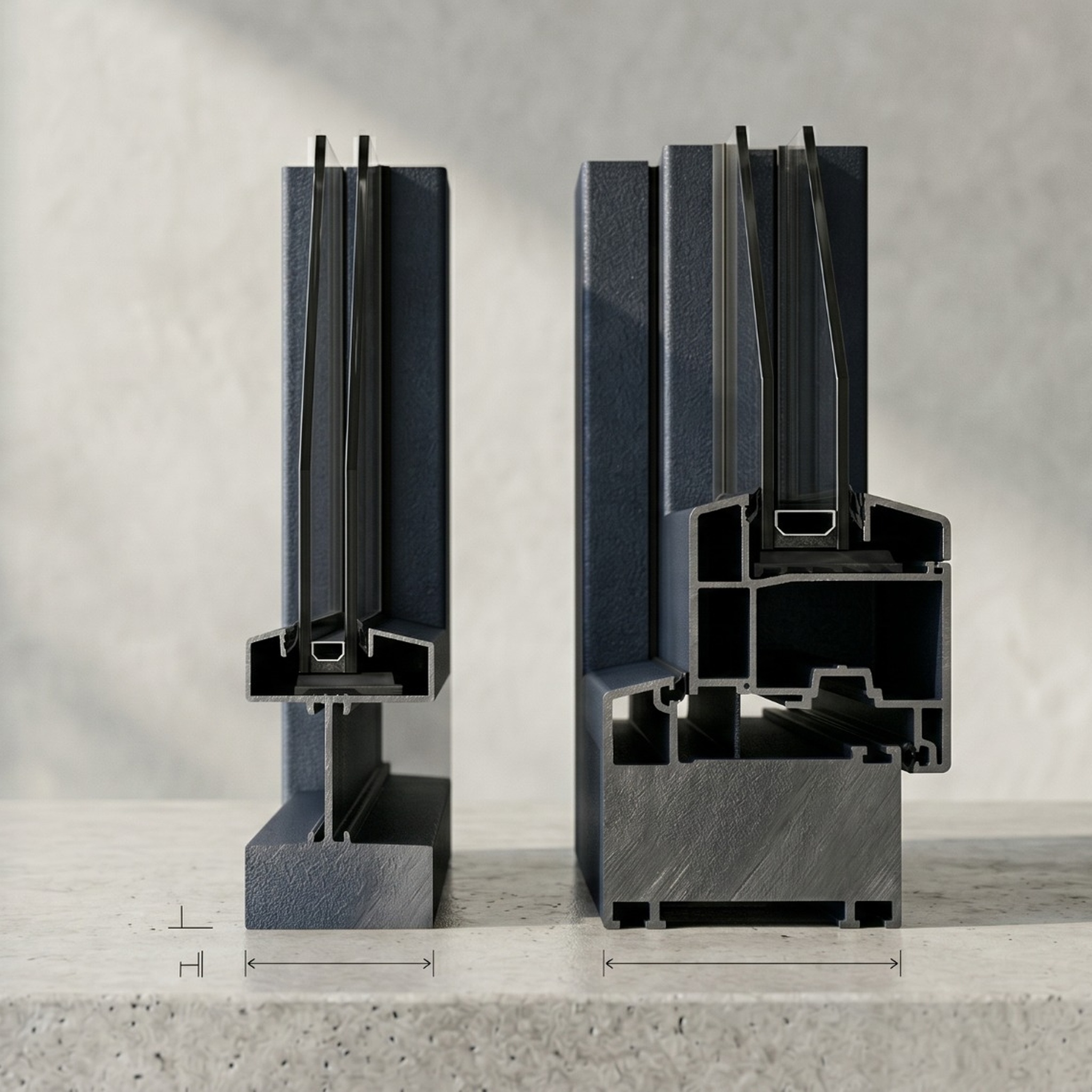
A practical guide to steel window frames in Australia, covering profiles, thermal performance, finishes, maintenance, cost considerations and how they compare to aluminium.
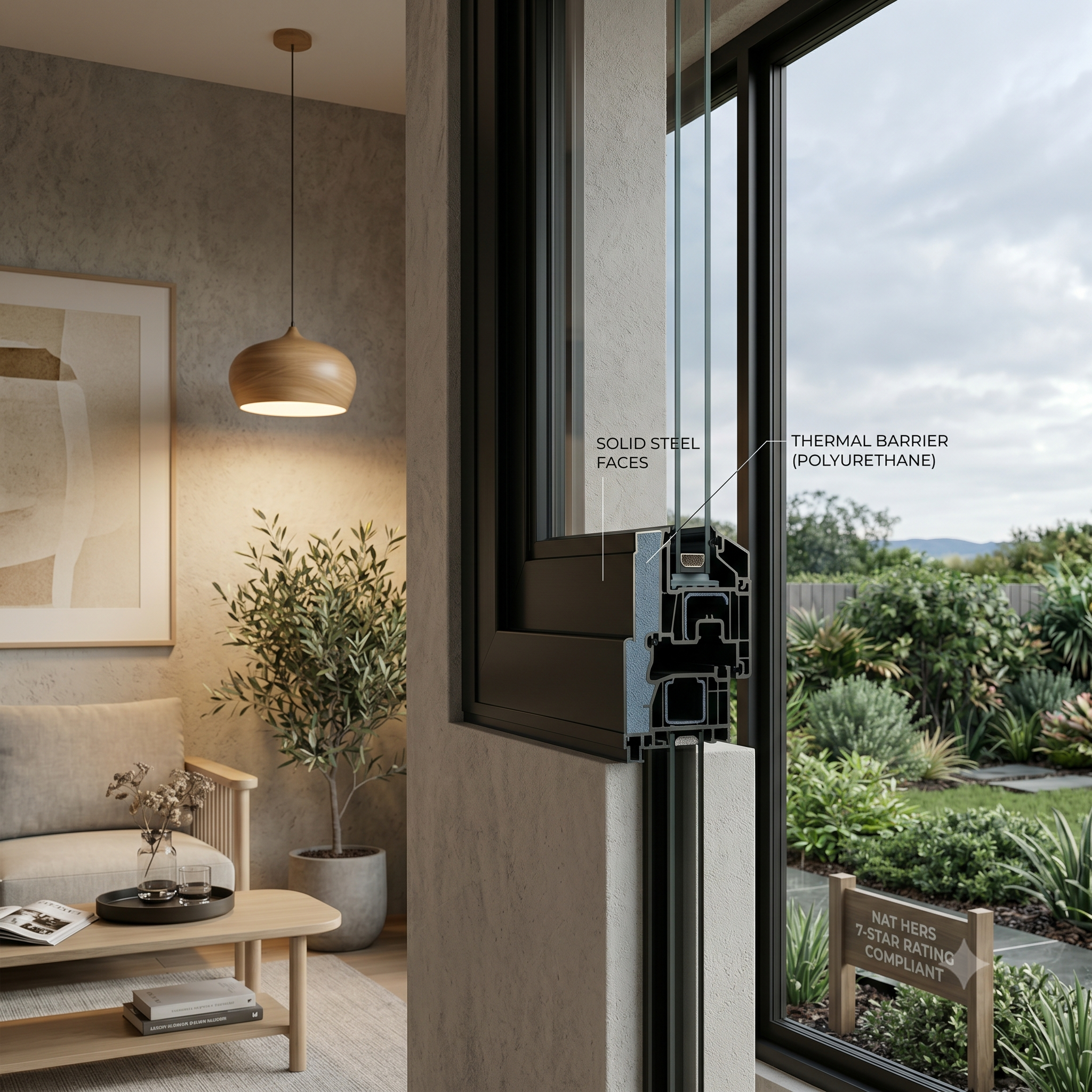
Thermally broken steel windows improve insulation and reduce condensation, making them best for high-performance, large-glazing, or extreme-climate projects.
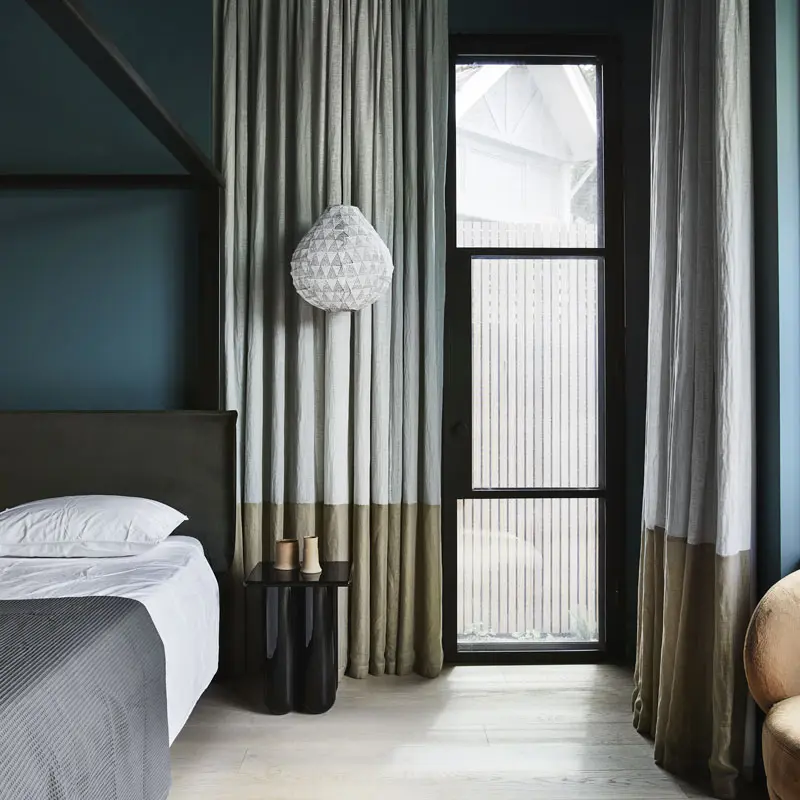
Splinter Society design a robust, contemporary residential addition in poetic juxtaposition to the heritage ...
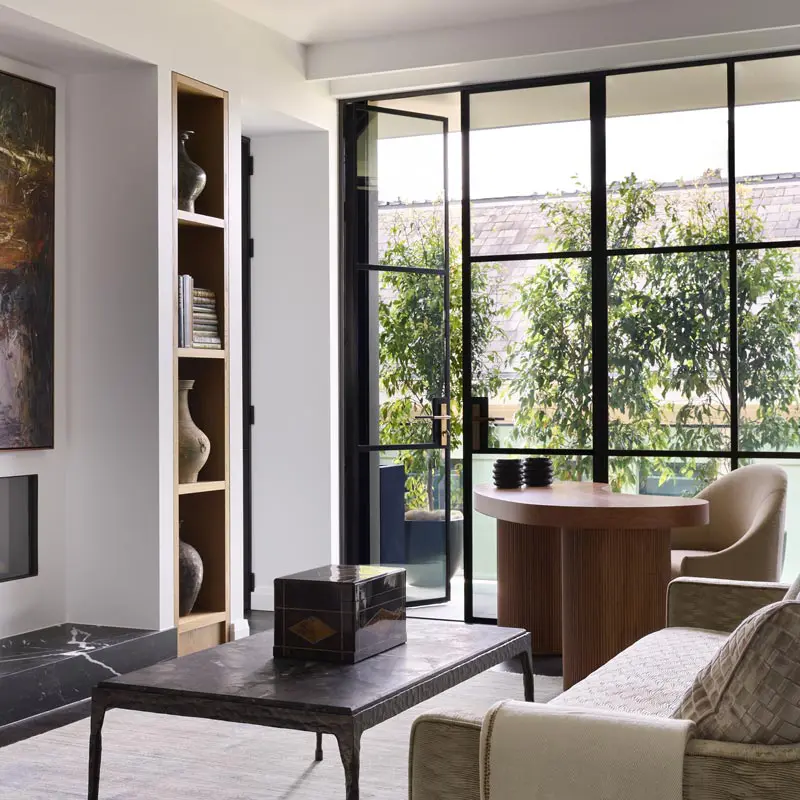
Our founders Josh and Alex chat to Est Living, about how our steel windows and doors can suit any home, thanks ...
Steel Window Frames: The Complete Australian Guide
Steel Window Frames keep appearing in the most architecturally considered homes being built and renovated across Australia, and for good reason. They are not a passing trend. They are a structural material with a specific set of advantages: dramatically thinner sightlines than aluminium, genuine longevity, and a visual quality that suits everything from heritage restorations to contemporary new builds.
They also come with real trade-offs. Steel conducts heat, costs more than aluminium, and requires a proper finish specification to perform over the long term. This guide covers all of it: how Steel Frames are built, how they compare to aluminium, what thermal performance actually looks like in practice, and what to check before you buy.
What Are Steel Window Frames?
Steel Window Frames are structural window frames fabricated from mild steel or thermally broken steel profiles. Unlike aluminium or uPVC frames, which rely on bulk to achieve rigidity, steel achieves it through material strength. That structural efficiency is what makes Steel Frames distinctive: the sightlines (the visible width of the frame when looking at a window) are dramatically thinner than what aluminium can achieve at equivalent strength.
A standard Steel Window Frame can achieve a face width of 20mm to 40mm. Many standard aluminium frames start considerably wider, though architectural aluminium series have narrowed the gap in recent years. For architects designing with large glazed panels, corner glazing, or multi-panel configurations, the sightline advantage of steel remains meaningful.
Beyond proportion, Steel Frames carry a visual weight and solidity that suits a wide range of project types. Metro Steel Windows supplies Steel Windows for new residential builds, heritage restorations, hospitality fitouts and commercial projects, contexts where the frame itself is part of the architectural language.
Understanding Steel Window Frame Profiles
Steel Window Frames are built around standardised rolled steel profiles. The two most common in Australian residential and commercial projects are the W20 and W40.
W20 Profile
The W20 profile has a face width of 20mm. It is the slimmest standard option and is specified where maximum glass area and minimal frame visibility are the priority. It suits contemporary residential builds, large pivot doors and frameless-style glazed facades. Because the profile is narrow, it requires precise installation tolerances, typically within 3mm, so the surrounding structure needs to be accurate before the frame goes in.
W40 Profile
The W40 profile has a face width of 40mm. It provides a more substantial sightline that suits heritage buildings, warehouse conversions and projects where a stronger visual frame is appropriate or required by heritage guidelines. The W40 also accommodates thicker insulated glazing units (IGUs), which matters when thermal performance is a priority.
On architectural drawings, profiles are typically called up by designation, W20 or W40, alongside the glazing specification, for example: “W40 frame, 6/12/6 IGU.” If you are working with an architect, this is the notation to look for in the window schedule.
Thermal Performance: Do Steel Frames Get Cold?
This is one of the most important questions to answer honestly. Steel is a conductor of heat. Without any intervention, a Steel Window Frame will transfer heat and cold through the frame, which means condensation on the interior face in cooler climates, heat loss in winter, and an impact on your NatHERS energy rating.
The fix is a thermal break.
What Is a Thermal Break?
A thermal break is a continuous strip of low-conductivity material, typically a structural polyamide, inserted between the interior and exterior faces of the steel profile. It physically interrupts the path that heat travels through the frame, substantially reducing thermal conductivity and the risk of condensation.
Metro Steel Windows manufactures a Thermally Broken Steel Window range designed for the Australian climate. Thermally Broken Steel Frames can achieve U-values that support NatHERS compliance when paired with appropriate glazing, typically a double-glazed IGU of 24mm or greater. Your energy assessor will confirm the specific U-value required for your climate zone and building design.
If you are building in Melbourne, Canberra, the Southern Highlands, Tasmania or any alpine area, a thermal break is not optional. It is the specification you should be requesting. In warmer climates like Queensland or northern Western Australia, non-thermally broken frames are often acceptable, but it is worth confirming with your energy assessor before specifying.
One honest acknowledgement: even with a thermal break, Steel Frames will not match the thermal performance of a premium uPVC system. If thermal performance is the single deciding factor and aesthetics are secondary, uPVC performs better on that metric. Most clients choosing steel are making a considered trade-off. They accept a slightly higher thermal conductivity in exchange for the structural and aesthetic properties that steel uniquely provides.
Steel vs Aluminium Window Frames: An Honest Comparison
This is the comparison most buyers are working through. Here is a straightforward breakdown:
| Feature | Steel Window Frames | Aluminium Window Frames |
| Minimum sightline | ~20mm (W20 profile) | Varies, architectural series can approach 35–45mm |
| Structural strength | Very high | Moderate |
| Thermal performance | Good with thermal break | Good with thermal break |
| Corrosion resistance | Requires protective coating | Naturally resistant |
| Coastal suitability | Yes, with correct coating | Yes |
| Lifespan | 50+ years with maintenance | 30–50 years |
| Cost | Higher | Lower |
| Aesthetic | Slim, architectural, industrial | Broader range of styles |
| Availability | Custom fabricated | Widely available off the shelf |
The cost difference is real and worth acknowledging. Steel Window Frames are a premium product. In our experience, a Steel Window package for a residential project can cost roughly two to three times an equivalent aluminium specification, depending on the profile, glazing and finish. That premium buys you structural performance, thinner sightlines, and a material that, properly maintained, will outlast most other window systems used in Australian construction.
Aluminium is not an inferior product. It is a different product. The choice between them depends on what your project requires architecturally and what your budget allows.
Not sure which is right for your project? Metro Steel Windows can advise on profile selection, glazing specs and relative cost for your specific brief. Contact the team here.
Finish and Colour Options for Steel Window Frames in Australia
Steel Window Frames require a protective coating to prevent corrosion. The standard finish process for a quality Steel Frame involves hot-dip galvanising followed by powder coating. Hot-dip galvanising provides a zinc barrier that protects the steel substrate. Powder coating is then applied over the galvanised surface in the specified colour. This sequence matters, because powder coat applied directly to bare steel without galvanising is a long-term maintenance problem.
Colour options are broad. Standard RAL and AS/NZS colours are available, and custom colour matching is possible on request. The most commonly specified finishes in current Australian residential projects include:
- Satin black, the most popular choice for contemporary and heritage projects
- Monument and Basalt, for a softer dark tone
- Surfmist and Paperbark, for lighter coastal or Hamptons-style homes
- Custom heritage colours for restoration work requiring period-accurate finishes
For coastal installations within 1–2km of the ocean, the coating specification matters more than it does inland. In those environments, additional surface protection and a regular inspection programme are worth factoring into your plans from the start.
How to Maintain Steel Window Frames
Steel Window Frames are low maintenance, but they are not zero maintenance. The finish is what needs attention, not the steel itself.
For inland installations, an annual inspection of the powder coat surface is sufficient. Look for chips, scratches or areas where the coating has been mechanically damaged. Small chips should be touched up promptly with a compatible touch-up paint to prevent moisture reaching the substrate.
For coastal installations within 1–2km of the ocean, inspect twice yearly. Salt-laden air is more aggressive, and any coating damage should be addressed quickly. A full recoat, typically every 10 to 15 years depending on exposure, will reset the protection and extend the frame’s life significantly.
The hardware (hinges, stays, locking mechanisms) should be lubricated annually with a silicone-based lubricant. Avoid petroleum-based products on powder-coated surfaces.
What to Look For When Buying Steel Window Frames in Australia
Not all Steel Window systems are equivalent. Here is what is worth checking before you commit to a supplier.
Profile specification. Ask whether the frames are fabricated from genuine rolled Steel Profiles (W20, W40) or from hollow rectangular sections (RHS). RHS-based frames are simpler to fabricate but produce heavier, less refined sightlines. If sightline width matters to your project, confirm the profile type in writing.
Glazing capacity. Check what thickness of IGU the frame can accommodate. A W40 frame can typically take a 28mm IGU, for example a 6/12/6 configuration. If your energy assessor requires a thicker unit for NatHERS compliance, confirm the frame can accept it before the order is placed.
Thermal break option. If you are building in a cool climate zone, confirm whether a thermally broken version is available in the profile you are specifying.
Finish process. Ask whether frames are hot-dip galvanised before powder coating, or primed and powder coated only. For any installation in a moderate or high-corrosion environment, hot-dip galvanising before powder coat is the correct specification.
Installation. Steel Windows are not standard glazier work. Ask whether your supplier installs their own frames or supplies only, and whether they can recommend an experienced installer in your area if required. Getting this wrong at installation undoes everything that was right in fabrication.
Fabrication lead times. Steel Windows are custom fabricated to order. Lead times of 8 to 14 weeks from order to delivery are typical. Confirm the current lead time with your supplier and factor it into your programme early.
Steel Window Frames for Different Project Types
New Residential Builds
In new builds, Steel Window Frames are most often specified where the architectural brief calls for large glazed openings, slim framing, or a strong contemporary aesthetic. The structural capacity of steel allows for spans that aluminium cannot achieve at the same sightline width.
The Strath Creek Farm House in Victoria’s High Country is a good example. Designed by Tandem Design Studio as an off-grid family retreat, the project used Metro’s M40 profile, finished in cement grey, for floor-to-ceiling awning windows and French doors throughout. In an alpine setting where the frame had to perform visually and structurally across large openings, steel was the only material that delivered the sightline the design required.
Renovations
In renovations, the most common application is replacing existing timber or aluminium frames to update the look of the building or to open up walls with larger glazed openings. Steel Frames can often be fitted into existing openings with the addition of a structural sub-frame, but each situation requires assessment. The surrounding structure needs to be capable of taking the load and meeting the installation tolerances the profile requires.
Heritage Restorations
Steel Window Frames have been used in Australian buildings since the early twentieth century, particularly in Art Deco and Inter-War construction from the 1920s onward. For heritage-listed properties or buildings in heritage conservation areas, Steel Frames are often the only material that will satisfy heritage authority requirements, both because they are the historically accurate material and because W40 profiles can replicate original sightline dimensions precisely.
The Balmain Residence in Sydney is a representative example. This heritage-listed double-storey sandstone home, designed by Mitchell Architects and built by Jackal Constructions, required M40 profile Steel Frames to bridge the original structure and a contemporary concrete extension. The profile geometry respected the building’s heritage scale while the glazed walkway and courtyard connection created an entirely contemporary living sequence inside it.
Hospitality and Commercial Projects
In hospitality and commercial fitouts, Steel Frames are specified for their durability and the visual weight they bring to a space. A Steel Framed glazed partition or facade has a presence that aluminium, regardless of finish, does not replicate.
The Continental Hotel in Sorrento, a heritage-listed venue on Victoria’s Mornington Peninsula operating since 1875, is a useful reference. The multi-million-dollar restoration, designed by Woods Bagot, required replacement of existing heritage windows and new internal Steel Framed doors and entryways across five buildings. W40 profile frames in black were used throughout, for the dining spaces overlooking the ocean and for the internal bar entries, because the profile matched the scale of the original architecture in a way no aluminium alternative could. In a project of that heritage sensitivity, getting the frame geometry right was not a design preference, it was a compliance requirement.
Bushfire-Prone Areas
Steel performs well in bushfire-prone areas and can be specified to meet BAL (Bushfire Attack Level) requirements when combined with appropriate glazing and sealing. If your site carries a BAL rating, confirm the specific requirements with your certifier and raise the BAL specification with your window supplier before ordering.
Ready to Specify Steel Windows for Your Project?
The right frame specification depends on your climate zone, glazing requirements, structural openings and programme. If you are at the research stage, a conversation with the Metro Steel Windows team is the most efficient next step. We can advise on profile selection, thermal performance requirements and lead times based on your brief.
To see how Steel Window and door systems perform across completed residential, heritage and commercial projects, visit our project gallery.
Request a project consultation →
Frequently Asked Questions
Are Steel Window Frames suitable for the Australian climate?
Yes, across most of Australia. In warm and temperate climates, standard Steel Frames perform well with correct coating and maintenance. In cooler climates including Melbourne, Canberra, Tasmania and alpine regions, Thermally Broken Steel Frames are recommended to manage condensation and meet energy performance requirements. Coastal environments require a robust finish specification, typically hot-dip galvanising followed by powder coating, along with periodic inspection.
How long do Steel Window Frames last?
In our experience, a correctly fabricated and finished Steel Window Frame, properly maintained, will last in excess of 50 years. The limiting factor is almost always the finish, not the steel itself. Frames that are recoated when the finish begins to deteriorate will outlast most other window materials used in Australian construction.
Do Steel Window Frames rust?
Bare steel will corrode when exposed to moisture, which is why the finish process matters. Frames that are hot-dip galvanised and then powder coated carry two layers of protection. In a standard inland environment with no mechanical damage to the coating, corrosion is not a practical concern. In coastal environments the risk is higher, and more frequent inspection is warranted.
What is the difference between a W20 and W40 Steel Window profile?
W20 and W40 refer to the face width of the rolled Steel Profile, 20mm and 40mm respectively. The W20 produces an extremely slim sightline suited to contemporary residential projects. The W40 has a more substantial frame that suits heritage buildings, warehouse conversions and projects where heritage guidelines require a specific sightline width. The W40 also accommodates thicker glazing units, which is relevant when thermal performance is a priority.
Can Steel Window Frames be retrofitted into an existing timber opening?
In most cases, yes. Steel Frames can be installed into existing timber openings using a structural sub-frame, which allows the new frame to be set correctly within the existing reveal. The key requirement is that the surrounding structure is sound and that the opening dimensions meet the installation tolerances for the profile being used. Each retrofit situation is different, and it is worth having your supplier or installer assess the opening before ordering.