Thermally Broken Steel Windows Australia: What They Are and Do You Actually Need Them?
If you’ve been researching steel windows for a project and someone mentioned thermal breaks, you’re probably wondering one of two things. Either what that actually means in plain English, or whether you actually need them or whether it’s just nice to have.
Both are fair questions. Here’s an honest answer to both.
Steel windows have carried a reputation for poor thermal performance for a long time, and that reputation isn’t entirely wrong – if you’re thinking about traditional mild steel windows from decades past. With a focus on increasing energy efficiency across both residential and commercial projects, its hard to know what steel window system may be best suited to your project.
This guide explains what a thermal break actually is, how it works inside a steel window frame, when you genuinely need one, and when our Metro M40 steel window system is perfectly fine.
Quick Answer
- Thermally broken steel windows have an insulating barrier built into the frame that stops heat and cold transferring through the steel profile
- Standard steel windows conduct temperature freely through the frame and the overall steel frame makes up a small portion of the surface area
- In Australia, thermally broken steel windows are most relevant for projects chasing 7-star NatHERS performance under NCC 2022, large glazing areas, double or triple glazing, and climate zones with real temperature swings, however in some cases these ratings can be met utilising the Metro M40 system and specialised glass
- Metro’s Secco OS2 system is our thermally broken steel window solution, designed to support Australian homes targeting 7-star NatHERS
What Is a Thermal Break ?
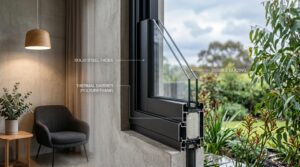
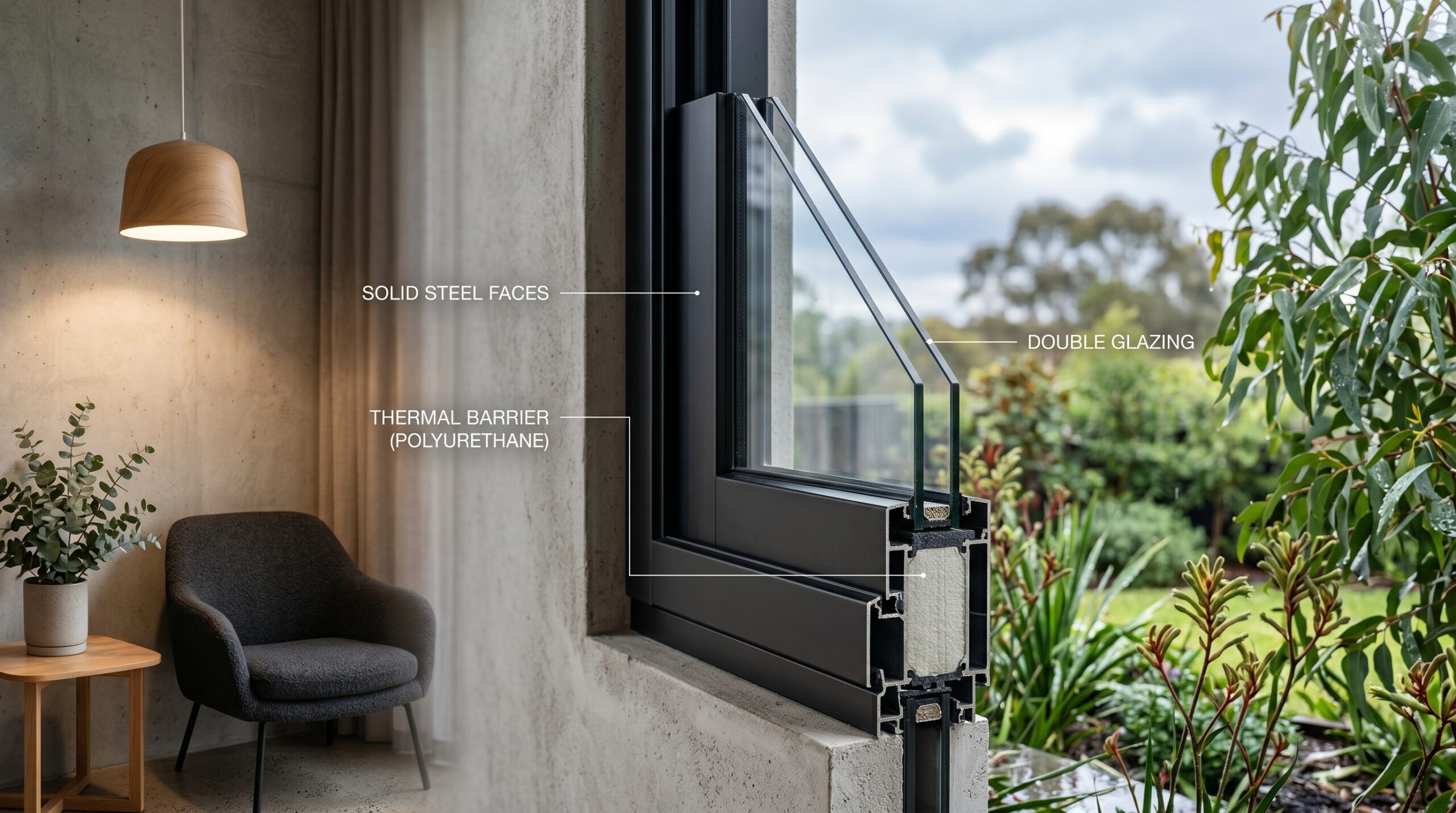
Think of a thermal break as a gap filler – but a structural one. It’s a layer of insulating material built into the window frame that sits between the inside face and the outside face of the steel profile, stopping temperature from travelling straight through.
A thermally broken frame inserts a non-conductive material – in the case of the Secco OS2 75, high-density polyurethane – between the two halves of the steel profile. The frame is still structurally solid, but thermally the two sides are separated. The inside face stays much closer to room temperature regardless of what’s happening outside.
It’s a relatively simple concept. The engineering to achieve it in a slim steel profile without compromising the look is where the work happens.
How It Works in Metro’s Steel Windows
Thermal breaks are fairly standard in aluminium windows at this point.
Metro’s thermally broken steel windows use the Secco OS2 system, an Italian-engineered profile that builds the thermal break directly into the steel frame during manufacturing rather than adding it on afterwards. The OS2 75 profile is designed to:
- Separate the inner and outer steel faces with a polyurethane thermal barrier
- Support double or triple glazing without widening the sightlines
- Accommodate low-e glass coatings for solar control
- Perform across all eight Australian NatHERS climate zones
- Support residential and commercial projects targeting 7-star NatHERS performance when correctly specified alongside the right glazing, orientation, and building envelope design
The thing worth knowing is that the Secco OS2 does all of this while keeping the slim, cold-formed profile that makes steel windows worth specifying in the first place. The thermal break adds depth to the profile, but the sightlines stay the same – the result is still a sleek, modern, and slim aesthetic.
Standard Steel Windows vs Thermally Broken Steel Windows
| Feature | Standard Steel Windows | Thermally Broken Steel Windows |
| Thermal performance | Achievable in the highly varied Australian conditions | Achievable in extreme conditions |
| Condensation risk | Higher in cold climates | Significantly reduced |
| NatHERS suitability | Lower star ratings | Supports 7-star NCC 2022 targets |
| Glazing options | Single or double | Double or triple |
| Profile appearance | Slim | Equally slim |
| Cost | Lower | Higher |
| Best for | Heritage applications, mild climates | High-performance residential, all climates |
Do You Actually Need Them?
Honestly, not always. It depends on your project, your climate, and what your energy assessor is telling you.
Here’s a straightforward breakdown.
When you need thermally broken steel windows
You’re targeting 7-star NatHERS performance or a high energy rating outcome
NCC 2022 has raised the bar significantly for new residential builds in Australia, with 7-star NatHERS now the benchmark most projects need to hit – and no apartment allowed to fall below 6 stars regardless of the average. That’s a meaningful shift, and windows play a real role in whether a building gets there or not. Standard steel frames without a thermal break make that harder, particularly on buildings with a lot of glass. The Secco OS2 is what we’d recommend when a project has serious energy rating requirements.
Your project has a lot of glazing
The more glass a building has, the more every frame and pane matters thermally. Floor-to-ceiling fixed steel windows, large pivot steel windows, or full-height sliding steel doors – these are all applications where a thermally broken frame makes a real difference to comfort and performance. A standard frame in those situations can undermine the glazing you’ve paid for.
You’re in a climate with proper seasons
Australia’s eight NatHERS climate zones cover everything from alpine cold to tropical humidity, and thermally broken windows matter more at the extremes. If you’re building in Victoria, the ACT, Tasmania, alpine NSW, or southern SA, condensation on standard steel frames in winter is a genuine concern. If you’re in a hot northern climate, heat transfer through the frame adds to cooling loads in a way that compounds over time.
You’re specifying double or triple glazing
If the glass spec includes double or triple glazing for acoustic or thermal reasons, it doesn’t make sense to pair that with a non-thermally broken frame. The glass is doing its job and the frame is working against it. Thermally broken frames and high-performance glazing work as a system – one without the other leaves performance on the table.
Condensation is a concern
In cooler climates and well air-conditioned spaces, a cold frame surface will attract condensation. Over time that creates moisture issues at the frame edge, on the wall, and on the glass. A thermally broken frame keeps the inside face warmer and largely eliminates that problem.
When standard steel windows are fine
Heritage and period renovation work
A lot of heritage overlays and period renovation briefs want steel windows that match original single-glazed profiles. In those cases, thermally broken double-glazed windows may be inappropriate on heritage grounds, and the building’s thermal performance is usually addressed in other ways. Standard steel windows are absolutely still the right call here.
Internal applications
Steel windows used internally – partition glazing, internal screens, room dividers – have no outside temperature to deal with. A thermal break is irrelevant in that context.
Mild climates with modest energy requirements
If your project sits in a mild climate zone and your energy assessor is comfortable with the numbers using standard frames, there’s no reason to pay for a thermal break you don’t need. Have that conversation with your assessor based on the actual building design.
The Secco OS2 System: What You’re Actually Specifying
When Metro recommends thermally broken steel windows and doors for a project, we’re talking about the Secco OS2 – an Italian-engineered system that’s been adapted for Australian climate conditions and energy requirements.
A few things worth knowing about it:
The profile is 75mm deep. That’s what accommodates the polyurethane thermal break and supports double or triple glazing. It’s slightly deeper than the standard M40 profile but the visual result is still architectural – the sightlines stay slim.
The thermal break is structural, not cosmetic. It physically separates the inner and outer steel sections. It’s not an add-on or a coating – it’s part of how the frame is made.
It works across the full range. The OS2 system is available across Metro’s steel windows and steel doors range – casement, awning, fixed, pivot steel windows, pivot steel doors, sliding steel doors, and more. You’re not limited to certain configurations to get the thermal performance.
It comes in galvanised steel, corten steel, or brass. So you have finish options beyond the standard M40 range if the project calls for it.
Specifying steel windows for a project with energy rating requirements? Speak with our team to get the right specification
Are They Worth the Extra Cost?
The honest answer is: it depends on the project. But here’s how we think about it.
They fix the one real weakness of steel windows. Steel’s structural performance, slim sightlines, and longevity are genuinely hard to match. Thermal performance was always the asterisk. The Secco OS2 removes that asterisk. If you want steel and you want the building to perform thermally, this is how you do both.
They make your glazing investment work properly. If you’re specifying double glazing for thermal or acoustic performance, a standard steel frame is undoing some of that work by conducting temperature through the frame itself. Thermally broken frames let the glazing do what it’s supposed to do.
They’re a longer-term play. NCC 2022 has lifted the bar and it’s unlikely to come back down. Specifying thermally broken steel windows now means the building is performing to a standard that won’t cause headaches down the track – for you, or for the client.
Common Terms You Might Come Across
If you’ve been searching around this topic, you might have seen it described in a few different ways. They all generally refer to the same thing:
- Thermal break steel windows – same product, slightly different phrasing
- Energy efficient steel windows – usually referring to thermally broken systems paired with double or triple glazing
- Double glazed steel windows – double glazing is standard with thermally broken steel window systems
- NatHERS steel windows – steel windows specified to meet NCC 2022 NatHERS energy requirements
- Secco OS2 steel windows – specifically Metro’s thermally broken system
Metro’s Secco OS2 covers all of these. View the full range of steel windows and doors or speak with our team to talk through what’s right for your project.
Frequently Asked Questions
- What does thermally broken mean in a steel window?
It means the frame has an insulating layer built into it that separates the inside and outside faces of the steel profile. That barrier stops heat and cold from travelling straight through the frame, which improves thermal performance and reduces the risk of condensation on the interior face. - Are all steel windows thermally broken?
No, and it’s worth being clear about that. Standard steel windows use a single continuous steel profile with no insulating barrier. Thermally broken steel windows are a specific product – in Metro’s case, the Secco OS2 system – that incorporates the break during manufacturing. We offer both: standard steel windows for heritage and simpler applications, and the Secco OS2 for high-performance projects. - Do I need thermally broken steel windows to achieve a 7-star NatHERS rating?
In most cases, yes – particularly for buildings with significant glazing in climates with real temperature variation. The specifics depend on your building design, glazing area, orientation, and climate zone, so your energy assessor is the right person to confirm what’s needed. But if you’re working towards 7-star and you’re specifying steel windows, the Secco OS2 is where we’d start that conversation. - Can thermally broken steel windows take double glazing?
Yes. The Secco OS2 is designed for double or triple glazing, with or without low-e coatings. That’s part of the point – the system is built to support high-performance glazing as part of a complete thermal solution. - Do they look any different to standard steel windows?
Not really. The OS2 profile is slightly deeper than a standard M40 profile, but the visual result – slim sightlines, welded joints, architectural quality – is the same. The thermal break sits inside the frame and isn’t visible once the window is installed. - Are they available across Metro’s full range?
Yes. The Secco OS2 thermal break system works across fixed, casement, awning, pivot steel windows, and arched steel windows, as well as single, double, pivot, bi-fold, sliding, and arched steel doors. View the full range - What is the Secco OS2 system?
It’s an Italian-engineered thermally broken steel window and door profile that Metro uses for high-performance projects. It has a polyurethane thermal break built into a 75mm deep profile, supports double and triple glazing, and is configured for Australian climate zones and NatHERS energy requirements. It’s our recommendation for any project targeting 7-star NatHERS performance. - Are they suitable for coastal projects?
Yes. The OS2 profiles are cold-rolled from galvanised material, so corrosion resistance is built in from the start. For coastal locations we’d also recommend a premium powder coat finish. Talk to our team about your specific location and we can advise on the right specification.
Not sure whether standard or thermally broken steel windows are right for your project? Talk to the Metro team about your location, glazing requirements, and NatHERS target and we’ll help you work out the right specification. Get in touch
Read more news.
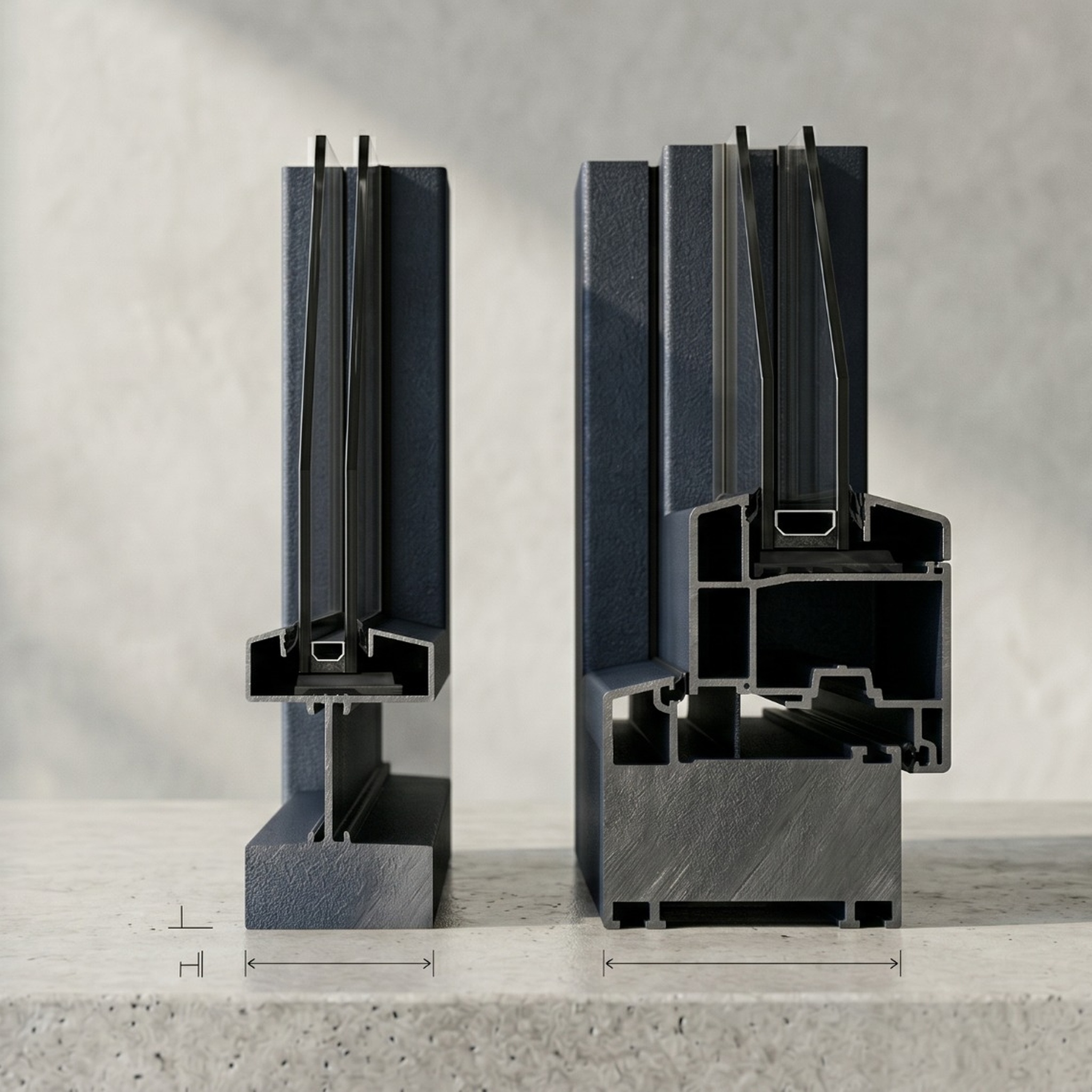
A practical guide to steel window frames in Australia, covering profiles, thermal performance, finishes, maintenance, cost considerations and how they compare to aluminium.
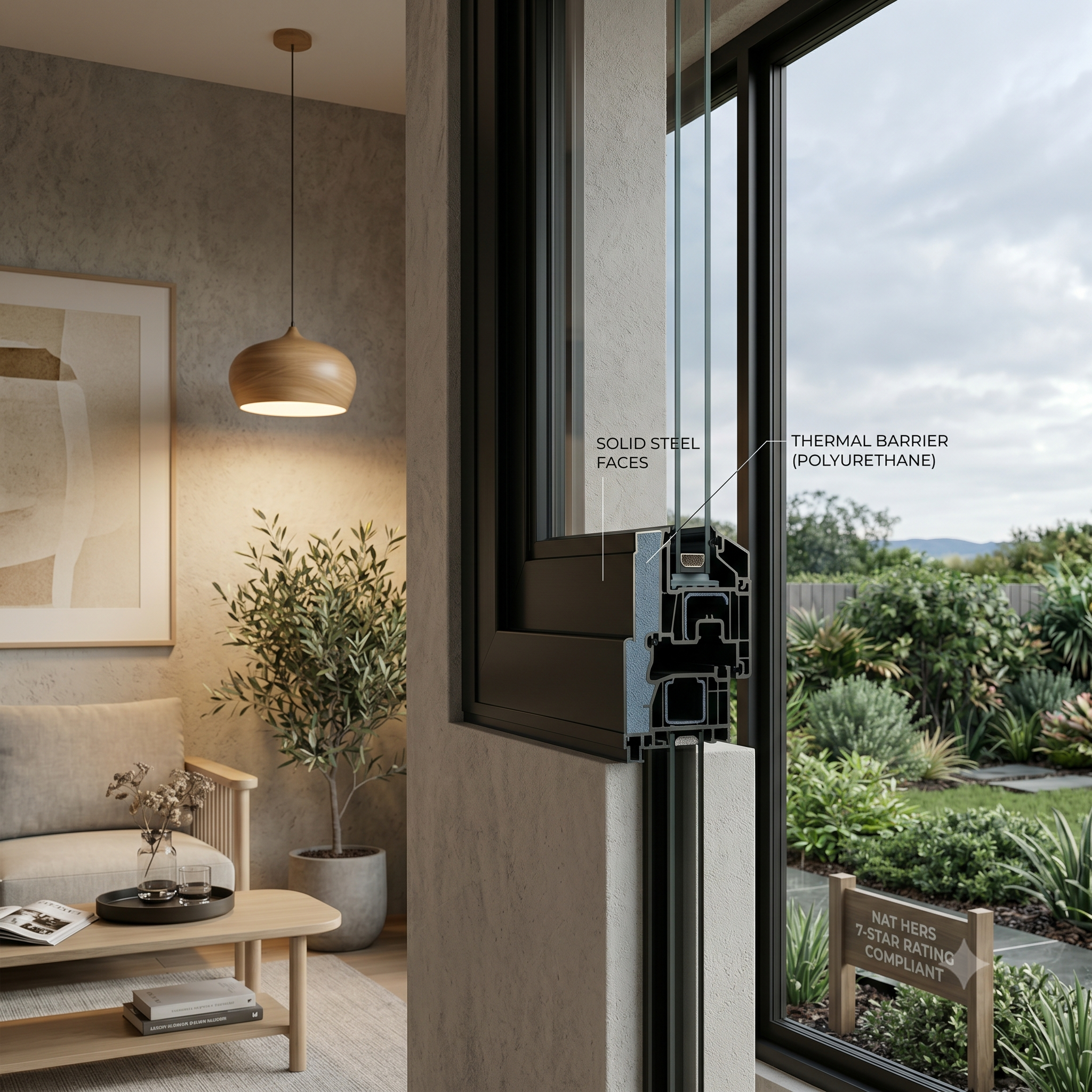
Thermally broken steel windows improve insulation and reduce condensation, making them best for high-performance, large-glazing, or extreme-climate projects.
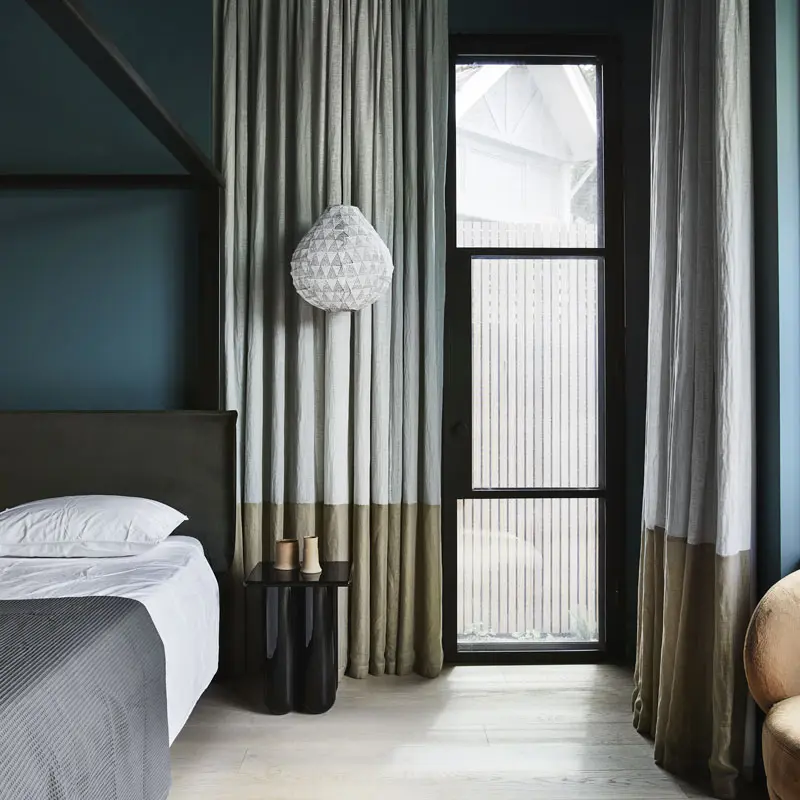
Splinter Society design a robust, contemporary residential addition in poetic juxtaposition to the heritage ...
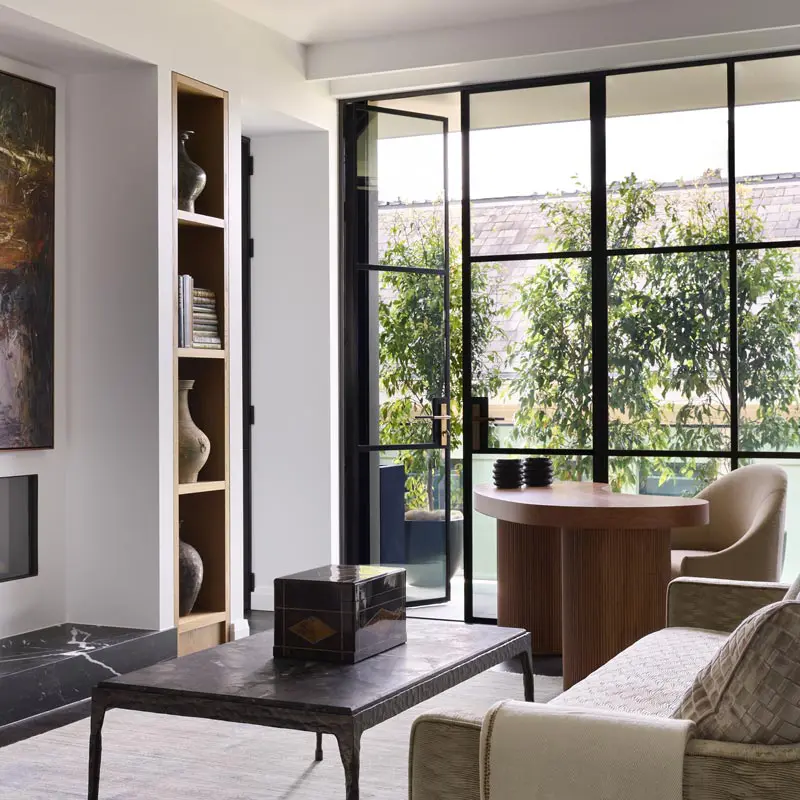
Our founders Josh and Alex chat to Est Living, about how our steel windows and doors can suit any home, thanks ...
If you’ve been researching steel windows for a project and someone mentioned thermal breaks, you’re probably wondering one of two things. Either what that actually means in plain English, or whether you actually need them or whether it’s just nice to have.
Both are fair questions. Here’s an honest answer to both.
Steel windows have carried a reputation for poor thermal performance for a long time, and that reputation isn’t entirely wrong – if you’re thinking about traditional mild steel windows from decades past. With a focus on increasing energy efficiency across both residential and commercial projects, its hard to know what steel window system may be best suited to your project.
This guide explains what a thermal break actually is, how it works inside a steel window frame, when you genuinely need one, and when our Metro M40 steel window system is perfectly fine.
Quick Answer
- Thermally broken steel windows have an insulating barrier built into the frame that stops heat and cold transferring through the steel profile
- Standard steel windows conduct temperature freely through the frame and the overall steel frame makes up a small portion of the surface area
- In Australia, thermally broken steel windows are most relevant for projects chasing 7-star NatHERS performance under NCC 2022, large glazing areas, double or triple glazing, and climate zones with real temperature swings, however in some cases these ratings can be met utilising the Metro M40 system and specialised glass
- Metro’s Secco OS2 system is our thermally broken steel window solution, designed to support Australian homes targeting 7-star NatHERS
What Is a Thermal Break ?
Think of a thermal break as a gap filler – but a structural one. It’s a layer of insulating material built into the window frame that sits between the inside face and the outside face of the steel profile, stopping temperature from travelling straight through.
A thermally broken frame inserts a non-conductive material – in the case of the Secco OS2 75, high-density polyurethane – between the two halves of the steel profile. The frame is still structurally solid, but thermally the two sides are separated. The inside face stays much closer to room temperature regardless of what’s happening outside.
It’s a relatively simple concept. The engineering to achieve it in a slim steel profile without compromising the look is where the work happens.
How It Works in Metro’s Steel Windows
Thermal breaks are fairly standard in aluminium windows at this point.
Metro’s thermally broken steel windows use the Secco OS2 system, an Italian-engineered profile that builds the thermal break directly into the steel frame during manufacturing rather than adding it on afterwards. The OS2 75 profile is designed to:
- Separate the inner and outer steel faces with a polyurethane thermal barrier
- Support double or triple glazing without widening the sightlines
- Accommodate low-e glass coatings for solar control
- Perform across all eight Australian NatHERS climate zones
- Support residential and commercial projects targeting 7-star NatHERS performance when correctly specified alongside the right glazing, orientation, and building envelope design
The thing worth knowing is that the Secco OS2 does all of this while keeping the slim, cold-formed profile that makes steel windows worth specifying in the first place. The thermal break adds depth to the profile, but the sightlines stay the same – the result is still a sleek, modern, and slim aesthetic.
Standard Steel Windows vs Thermally Broken Steel Windows
| Feature | Standard Steel Windows | Thermally Broken Steel Windows |
| Thermal performance | Achievable in the highly varied Australian conditions | Achievable in extreme conditions |
| Condensation risk | Higher in cold climates | Significantly reduced |
| NatHERS suitability | Lower star ratings | Supports 7-star NCC 2022 targets |
| Glazing options | Single or double | Double or triple |
| Profile appearance | Slim | Equally slim |
| Cost | Lower | Higher |
| Best for | Heritage applications, mild climates | High-performance residential, all climates |
Do You Actually Need Them?
Honestly, not always. It depends on your project, your climate, and what your energy assessor is telling you.
Here’s a straightforward breakdown.
When you need thermally broken steel windows
You’re targeting 7-star NatHERS performance or a high energy rating outcome
NCC 2022 has raised the bar significantly for new residential builds in Australia, with 7-star NatHERS now the benchmark most projects need to hit – and no apartment allowed to fall below 6 stars regardless of the average. That’s a meaningful shift, and windows play a real role in whether a building gets there or not. Standard steel frames without a thermal break make that harder, particularly on buildings with a lot of glass. The Secco OS2 is what we’d recommend when a project has serious energy rating requirements.
Your project has a lot of glazing
The more glass a building has, the more every frame and pane matters thermally. Floor-to-ceiling fixed steel windows, large pivot steel windows, or full-height sliding steel doors – these are all applications where a thermally broken frame makes a real difference to comfort and performance. A standard frame in those situations can undermine the glazing you’ve paid for.
You’re in a climate with proper seasons
Australia’s eight NatHERS climate zones cover everything from alpine cold to tropical humidity, and thermally broken windows matter more at the extremes. If you’re building in Victoria, the ACT, Tasmania, alpine NSW, or southern SA, condensation on standard steel frames in winter is a genuine concern. If you’re in a hot northern climate, heat transfer through the frame adds to cooling loads in a way that compounds over time.
You’re specifying double or triple glazing
If the glass spec includes double or triple glazing for acoustic or thermal reasons, it doesn’t make sense to pair that with a non-thermally broken frame. The glass is doing its job and the frame is working against it. Thermally broken frames and high-performance glazing work as a system – one without the other leaves performance on the table.
Condensation is a concern
In cooler climates and well air-conditioned spaces, a cold frame surface will attract condensation. Over time that creates moisture issues at the frame edge, on the wall, and on the glass. A thermally broken frame keeps the inside face warmer and largely eliminates that problem.
When standard steel windows are fine
Heritage and period renovation work
A lot of heritage overlays and period renovation briefs want steel windows that match original single-glazed profiles. In those cases, thermally broken double-glazed windows may be inappropriate on heritage grounds, and the building’s thermal performance is usually addressed in other ways. Standard steel windows are absolutely still the right call here.
Internal applications
Steel windows used internally – partition glazing, internal screens, room dividers – have no outside temperature to deal with. A thermal break is irrelevant in that context.
Mild climates with modest energy requirements
If your project sits in a mild climate zone and your energy assessor is comfortable with the numbers using standard frames, there’s no reason to pay for a thermal break you don’t need. Have that conversation with your assessor based on the actual building design.
The Secco OS2 System: What You’re Actually Specifying
When Metro recommends thermally broken steel windows and doors for a project, we’re talking about the Secco OS2 – an Italian-engineered system that’s been adapted for Australian climate conditions and energy requirements.
A few things worth knowing about it:
The profile is 75mm deep. That’s what accommodates the polyurethane thermal break and supports double or triple glazing. It’s slightly deeper than the standard M40 profile but the visual result is still architectural – the sightlines stay slim.
The thermal break is structural, not cosmetic. It physically separates the inner and outer steel sections. It’s not an add-on or a coating – it’s part of how the frame is made.
It works across the full range. The OS2 system is available across Metro’s steel windows and steel doors range – casement, awning, fixed, pivot steel windows, pivot steel doors, sliding steel doors, and more. You’re not limited to certain configurations to get the thermal performance.
It comes in galvanised steel, corten steel, or brass. So you have finish options beyond the standard M40 range if the project calls for it.
Specifying steel windows for a project with energy rating requirements? Speak with our team to get the right specification
Are They Worth the Extra Cost?
The honest answer is: it depends on the project. But here’s how we think about it.
They fix the one real weakness of steel windows. Steel’s structural performance, slim sightlines, and longevity are genuinely hard to match. Thermal performance was always the asterisk. The Secco OS2 removes that asterisk. If you want steel and you want the building to perform thermally, this is how you do both.
They make your glazing investment work properly. If you’re specifying double glazing for thermal or acoustic performance, a standard steel frame is undoing some of that work by conducting temperature through the frame itself. Thermally broken frames let the glazing do what it’s supposed to do.
They’re a longer-term play. NCC 2022 has lifted the bar and it’s unlikely to come back down. Specifying thermally broken steel windows now means the building is performing to a standard that won’t cause headaches down the track – for you, or for the client.
Common Terms You Might Come Across
If you’ve been searching around this topic, you might have seen it described in a few different ways. They all generally refer to the same thing:
- Thermal break steel windows – same product, slightly different phrasing
- Energy efficient steel windows – usually referring to thermally broken systems paired with double or triple glazing
- Double glazed steel windows – double glazing is standard with thermally broken steel window systems
- NatHERS steel windows – steel windows specified to meet NCC 2022 NatHERS energy requirements
- Secco OS2 steel windows – specifically Metro’s thermally broken system
Metro’s Secco OS2 covers all of these. View the full range of steel windows and doors or speak with our team to talk through what’s right for your project.
Frequently Asked Questions
- What does thermally broken mean in a steel window?
It means the frame has an insulating layer built into it that separates the inside and outside faces of the steel profile. That barrier stops heat and cold from travelling straight through the frame, which improves thermal performance and reduces the risk of condensation on the interior face. - Are all steel windows thermally broken?
No, and it’s worth being clear about that. Standard steel windows use a single continuous steel profile with no insulating barrier. Thermally broken steel windows are a specific product – in Metro’s case, the Secco OS2 system – that incorporates the break during manufacturing. We offer both: standard steel windows for heritage and simpler applications, and the Secco OS2 for high-performance projects. - Do I need thermally broken steel windows to achieve a 7-star NatHERS rating?
In most cases, yes – particularly for buildings with significant glazing in climates with real temperature variation. The specifics depend on your building design, glazing area, orientation, and climate zone, so your energy assessor is the right person to confirm what’s needed. But if you’re working towards 7-star and you’re specifying steel windows, the Secco OS2 is where we’d start that conversation. - Can thermally broken steel windows take double glazing?
Yes. The Secco OS2 is designed for double or triple glazing, with or without low-e coatings. That’s part of the point – the system is built to support high-performance glazing as part of a complete thermal solution. - Do they look any different to standard steel windows?
Not really. The OS2 profile is slightly deeper than a standard M40 profile, but the visual result – slim sightlines, welded joints, architectural quality – is the same. The thermal break sits inside the frame and isn’t visible once the window is installed. - Are they available across Metro’s full range?
Yes. The Secco OS2 thermal break system works across fixed, casement, awning, pivot steel windows, and arched steel windows, as well as single, double, pivot, bi-fold, sliding, and arched steel doors. View the full range - What is the Secco OS2 system?
It’s an Italian-engineered thermally broken steel window and door profile that Metro uses for high-performance projects. It has a polyurethane thermal break built into a 75mm deep profile, supports double and triple glazing, and is configured for Australian climate zones and NatHERS energy requirements. It’s our recommendation for any project targeting 7-star NatHERS performance. - Are they suitable for coastal projects?
Yes. The OS2 profiles are cold-rolled from galvanised material, so corrosion resistance is built in from the start. For coastal locations we’d also recommend a premium powder coat finish. Talk to our team about your specific location and we can advise on the right specification.
Not sure whether standard or thermally broken steel windows are right for your project? Talk to the Metro team about your location, glazing requirements, and NatHERS target and we’ll help you work out the right specification. Get in touch